

Speaker
-
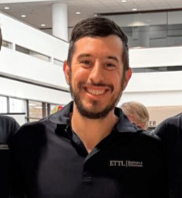 James Werbiski PEProject Manager | ETTL Engineers & Consultants
James “Jimmy” Werbiski, P.E., is a Project Engineer with ETTL Engineers & Consultants in Tyler, Texas. His work focuses on geotechnical investigations, construction materials testing, and project management for municipal infrastructure, commercial development, and transportation projects throughout East Texas.
Jimmy began his career with ETTL in 2014 as a field technician, gaining extensive hands-on experience performing construction materials testing and site observation on projects ranging from residential developments to large-scale infrastructure construction. During his time, he worked closely with engineers and contractors in the field, serving as the “eyes and ears” of the professional engineer to verify that construction methods and practices were in accordance with project specifications.
While balancing both part-time and full-time work, Jimmy returned to school to pursue a B.S. in Civil Engineering from the University of Texas at Tyler, graduating in 2022. Shortly before graduation, he was promoted to Project Engineer, where he now prepares geotechnical proposals, develops subsurface exploration programs, and manages projects from planning through reporting.
In addition to his engineering responsibilities, Jimmy leads internal technology initiatives at ETTL, including the implementation of BoreDM and VIKTOR (web-based engineering applications) to modernize geotechnical data workflows and reporting systems. He is currently developing internal engineering tools and AI-assisted workflows designed to improve efficiency in geotechnical analysis and reporting.
Local Time
- Timezone: America/New_York
- Date: Sep 16 2026
- Time: 5:00 PM - 6:00 PM
A New Age of Engineering Tools: More Time to Engineer
Engineering often requires managing enormous amounts of information. Regulatory requirements, expectations for precision, documentation, calculations, project data, and administrative responsibilities all compete for a resource that remains finite: the engineer’s time. The challenge, then, is not simply how to work faster, but how to make better use of that finite resource. How can we increase the capacity of the engineer without increasing the burden?
When these demands compete for limited time, the risk is that they encroach upon the very thing an engineer is hired to provide—engineering judgment: the time required to evaluate a problem, consider experience and available information, and synthesize an appropriate solution. Engineers can reclaim that time by extending their workday, increasing project costs, or accepting that fewer tasks can be accomplished with the resources available.
But what if neither time nor engineering judgment had to be sacrificed?
We are entering a new age of engineering tools capable of changing that equation. Artificial intelligence and AI-assisted development offer us an opportunity. An opportunity to increase the effectiveness of the engineer by reducing the time consumed by repetitive calculations, data management, information retrieval, and other necessary but time-intensive tasks.
Through the lens of geotechnical engineering using real-world tools currently being developed and implemented at ETTL Engineers and Consultants, this presentation will explore how AI-assisted engineering applications can connect previously isolated workflows, automate repetitive processes, and return valuable time to the engineer. That reclaimed capacity can be invested where it matters most: exercising sound engineering judgment, mentoring younger professionals, solving increasingly complex problems, and serving our communities.
Resilience does not always mean asking engineers to carry a greater load. Sometimes, it means giving them a better tool.