

Speaker
-
 Louis Klusmeyer PE, SESenior Project Manager | Jacobs
Louis Klusmeyer is a project leader and coastal development professional with a strong background in managing complex public infrastructure and recreation projects along the Texas coast. The engineer for design of the replacement of Bob Hall Pier, Louis has played a central role in reimagining one of the Coastal Bend’s most iconic recreational landmarks—balancing community needs, environmental stewardship, and long-term coastal resilience during the design of the new Bob Hall Pier.
Louis brings extensive experience in project planning, stakeholder coordination, and sustainable design, with a focus on creating spaces that enhance public access while protecting the natural beauty of the Gulf environment. His work reflects a deep commitment to collaboration across local governments, engineering teams, and community organizations to ensure projects meet both functional and ecological goals.
Local Time
- Timezone: America/New_York
- Date: Sep 16 2026
- Time: 3:30 PM - 4:30 PM
-
Convention Center First Floor
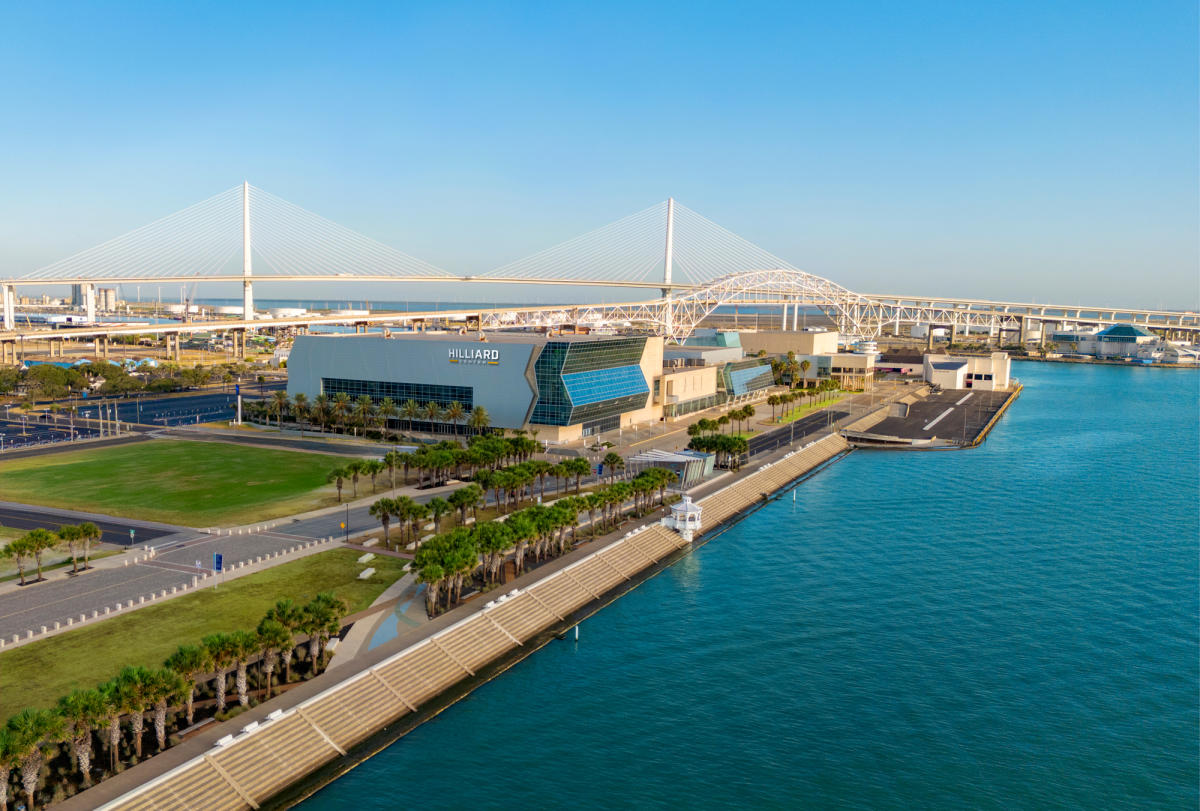
- 1901 N Shoreline Blvd, Corpus Christi, TX 78401
Category
Bob Hall Pier, A Case Study in Resilience and Durability
Bob Hall Pier is a recreational fishing pier on the beach on Padre Island. This pier is an infrastructure project that incorporates climate adaptation, resource management, durability and resilience into the design. We will discuss how the design criteria was developed and materials were selected to incorporate durability, resiliency and forward thinking practices into the design for a 50 year lifespan. Bob Hall Pier is 1,250 ft long with a 20 ft wide stem extending from the shoreline into the Gulf. The pier head at the end is 108 ft wide and 49 ft deep. The stem and pier head are larger than the previous pier and it has been wildly popular with the public since opening in March 2026. The pier is supported on steel pipe piles with two piles spaced at 33 ft on center along the stem. The pipe piles support precast concrete beams which support timber popoff panels. The precast concrete beams are oriented along the pier stem in a innovative approach to reduce the height of the pier structure and therefore reduce the wave loading on the pier. The timber popoff panels are not connected to the concrete structure and are free to “popoff” when waves reach the pier structure. The pier is designed for the forces resulting from waves reaching above the height of the pier resulting in the pier being alternately submerged and above water as the wave move toward the shoreline.
