

Speaker
-
 Xinyi Jiang PhD, PEProject Engineer | Braun Intertec
Xinyi Jiang, Ph.D., P.E., is a geotechnical engineer and Project Engineer at Braun Intertec with experience supporting a wide range of commercial, transportation, industrial, and infrastructure projects. Her work focuses on geotechnical investigations, foundation design, settlement evaluation, slope stability analysis, and ground improvement solutions for challenging subsurface conditions.
Dr. Jiang has managed and contributed to projects involving shallow and deep foundation systems, retaining structures, embankments, pavement subgrades, and site development. She regularly collaborates with multidisciplinary project teams to provide practical and cost-effective engineering recommendations that support constructability, long-term performance, and risk management throughout design and construction.
Local Time
- Timezone: America/New_York
- Date: Sep 16 2026
- Time: 3:30 PM - 4:30 PM
-
Convention Center First Floor
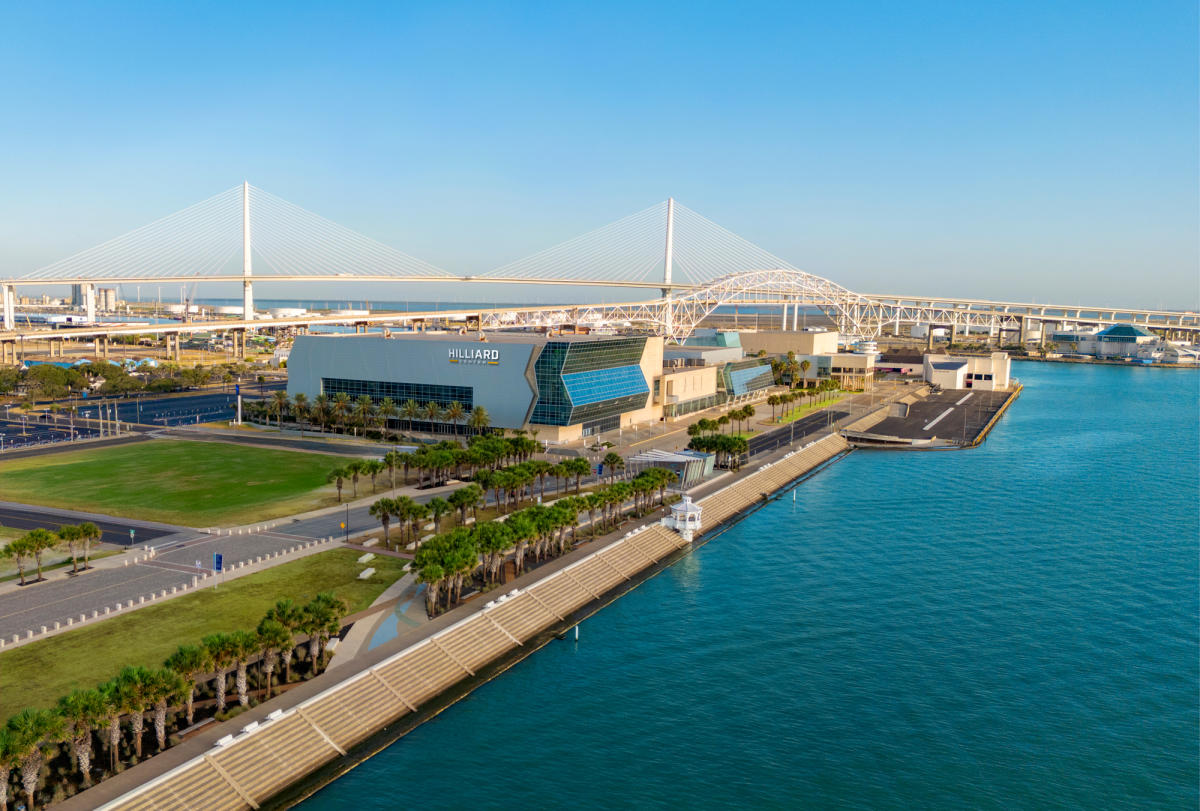
- 1901 N Shoreline Blvd, Corpus Christi, TX 78401
Category
Increase in Climactic Events Causing Increase in Foundation Costs
Recent increases in extreme weather conditions have created impacts, such as flooding, which are causing an increased need in resiliency for foundation systems. In many cases, the effects of this increased resiliency come in the form of substructures becoming more expensive due to deeper design scour depths, changes away from regionally-common foundation types, and/or more complex construction concerns.
The first case study examines a roadway that flooded during intense storms in Spring 2019, causing an extended closure and a two-hour detour. Concerns about future events led to its replacement in Fall 2021 with a 1,097-foot-long bridge founded on driven piles. The second and third case studies involve bridges where hydraulic criteria were revised from a 100-year to a 200-year flood event, increasing design scour depths by approximately 2 feet. In both cases, higher lateral demands combined with deeper scour and site stratigraphy made driven piles insufficient, requiring a transition to drilled shafts.
These foundation changes increased material quantities, installation durations, and labor costs. More significantly, shifting from driven piles to drilled shafts altered construction complexity, requiring larger mobilization efforts, slower production rates, enhanced quality control, and greater concern to groundwater conditions.
Collectively, these case studies demonstrate that relatively modest changes in hydraulic design criteria can trigger disproportionate impacts on foundation selection and substructure cost. For these case studies, the discussion focus on quantifying foundation cost differences attributable to both scour elevation changes and foundation type transitions and highlighting the broader budgetary implications of designing infrastructure for a severe weather conditions.
